I treatments now available, patients may understandably wonder whether the goal should always be to avoid surgery.
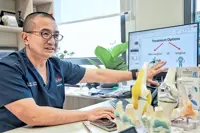
Dr Arvin stressed that the answer depends on the individual patient, noting that if assessment shows intervention is not necessary, it may not be recommended.
For example, a patient may have relatively minor neurological deficits and imaging may show an occlusion that does not warrant an invasive procedure.
Conversely, when a significant blockage threatens a large area of the brain, intervention may offer substantial benefit in an appropriately selected patient.
The decision therefore goes beyond simply asking which treatment is less invasive.
“It can be easy to get a diagnosis. It may not be as easy to find a good solution,” Dr Rishikesan pointed out.
Doctors must consider the likely benefits of treatment against its risks, as well as the patient’s overall condition, age, functional status, circumstances and priorities.
“Sometimes, doing something carries a risk, and is the risk worth it?” he said.
“These are life questions that need to be considered.”
In some situations, the best course is clear. In others, the balance between intervention and conservative treatment is less certain.
This is where shared decision-making becomes particularly important. Rather than focusing only on what can technically be done, the neurological team considers what should be done for that particular patient.
“Communication is key,” said Dr Rishikesan, “so that everyone understands the risks, benefits and possible outcomes clearly before making a decision.”
A team around the patient
Modern neuroscience increasingly depends on collaboration.
A patient with an acute neurological problem may require input from emergency physicians, neurologists, interventional radiologists, neurosurgeons, radiologists, critical-care specialists and rehabilitation professionals, depending on the condition.
The same teamwork continues beyond the initial treatment.
Physiotherapists, occupational therapists, speech and language therapists, nurses and other rehabilitation professionals may play important roles in helping patients regain function and return to everyday life.
As neuroscience continues to evolve, specialists have a growing range of approaches to consider, with the patient’s condition and circumstances guiding the decision-making process.
Recognising neurological symptoms and seeking medical attention promptly remain important when managing acute neurological conditionitions.

![[Story] Husband Divorces Wife After Giving Birth To Triplets - 10 Years Later, He Discovers Her Secret And Does This](https://images.outbrainimg.com/transform/v3/eyJpdSI6IjdmYjI1NDVhMDg5MmEyZGY3N2EwNDM3Njk0ZGI4YjU1NTM0OWVhZjRlMjUwODcyNzdlY2RkMzc3YmFjMDBhZmMiLCJ3IjozMDAsImgiOjIwMCwiZCI6MS41LCJjcyI6MCwiZiI6NCwiYWlnIjpmYWxzZX0.webp "[Story] Husband Divorces Wife After Giving Birth To Triplets - 10 Years Later, He Discovers Her Secret And Does This")