src='https://pagead2.googlesyndication.com/pagead/js/adsbygoogle.js?client=ca-pub-2513966551258002'/> Rightways Infolinks.com, 2618740 , RESELLER

Pages

Share This

Deepseek https://www.deepseek.com/./深度求索 DeepSeek | 深度求索 https://askaichat.app/chat

Sunday, January 18, 2026

Under­stand­ing pop­u­lar weight-loss drugs


MALAYSIA is the most obese and over­weight nation in Asean.

Over­weight adults form 32.6% of the pop­u­la­tion, while obese adults form another 21.8%, adding up to 54.4% of the pop­u­la­tion.

Not only that, about 29.8% of chil­dren are obese or over­weight.

In addi­tion, about 21% of Malay­si­ans are dia­betic, of which 80% are obese or over­weight.

The Health Min­istry (MOH) is intro­du­cing glu­ca­gon-like pep­tide 1 (GLP-1) medi­cines for “vul­ner­able groups” this year.

Who the vul­ner­able groups are is unclear.

However, it behoves every­one to ensure that patient safety is not com­prom­ised by the use of GLP-1 medi­cines.

How they work

GLP-1 medi­cines are receptor agon­ists that mimic the GLP-1 hor­mone that is nat­ur­ally released in the gastrointest­inal tract in response to eat­ing.

When a per­son eats, the digest­ive sys­tem breaks down car­bo­hydrates into simple sug­ars that enter the blood­stream.

GLP-1 stim­u­lates the release of insulin from the pan­creas.

Insulin, a pan­cre­atic hor­mone, helps get gluc­ose out of the blood­stream into the body’s cells, where it is used for nour­ish­ment and energy.

In dia­betes, the body’s cells are res­ist­ant to insulin, do not pro­duce suf­fi­cient insulin, or both. GLP-I medi­cines stim­u­late the pan­creas to release insulin and reduce the release of glu­ca­gon.

Both insulin and glu­ca­gon con­trol the blood gluc­ose levels in humans, includ­ing type II dia­bet­ics.

GLP-1 medi­cines also act on the brain to reduce hun­ger and delay empty­ing of the stom­ach.

These drugs are used in the man­age­ment of type II dia­betes, and in some instances, obesity in non-dia­bet­ics.

They reduce food crav­ings, increase full­ness (sati­ety), slow diges­tion and can help con­trol blood gluc­ose.

GLP-1 medi­cines were licensed for dia­betes man­age­ment in Malay­sia in 2007, and was approved for obesity man­age­ment in 2019.

As of 2025, there are more than 30 GLP-1 medi­cines registered.

There are dif­fer­ent types of GLP-1 medi­cines.

Some are injec­tions and oth­ers

are tab­lets. Some are licensed for dia­betes, and oth­ers are licensed for weight-loss man­age­ment, or to treat the over­weight with weight-related health prob­lems.

Side effects

Like all medi­cines, GLP-1 agon­ists have side effects.

The com­mon ones are gastrointest­inal, i.e. nausea, vomit­ing and diarrhoea, which are usu­ally mild to mod­er­ate, and of short dur­a­tion.

Some­times, these side effects can be ser­i­ous, lead­ing to severe dehyd­ra­tion that requires hos­pit­al­isa­tion.

A ser­i­ous, but uncom­mon, side effect is pan­cre­at­itis.

Any­one on GLP-1 medi­cine with severe abdom­inal pain that radi­ates to the back should seek imme­di­ate med­ical atten­tion.

Other ser­i­ous, but uncom­mon, side effects include: > Gast­ro­paresis – where move­ment of food out of the stom­ach is slowed or stopped > Bowel obstruc­tion – a block­age that keeps food from passing through the intest­ines > Gall­stone attacks, and

> Bile duct block­age.

Rapid weight loss can cause facial changes that include a hol­lowed look, wrinkles, sunken eyes, sag­ging jowls around the jaws and neck, and changes in the size of the lips, cheek and chin.

This is com­monly called the “Ozempic” face, after the brand name of one of the more wellknown GLP-1 med­ic­a­tions.

If the weight loss is less rapid, the facial changes would not be so obvi­ous.

Sig­ni­fic­ant facial changes can be treated by plastic sur­gery.

The sexual side effects of GLP-1 medi­cines involve both poten­tial improve­ments (through weight loss and hor­monal optim­isa­tion), and declines in libido or arousal, which is vari­able across sex and indi­vidual pro­files.

A full list of the known side effects is found in the product inform­a­tion of the indi­vidual GLP-1 medi­cine.

A recent review repor­ted that

GLP-1 medi­cines may have little or no effect on obesity-related can­cers, i.e. thyroid, breast, pan­cre­atic or kid­ney.

They may also have little or no effect on colorectal, oeso­pha­geal, liver, gall­blad­der, ovarian or endo­metrial can­cer; mul­tiple myel­oma; or men­in­gioma (low cer­tainty).

The effect on gast­ric can­cer was very uncer­tain.

Cur­rent data does not sup­port a causal asso­ci­ation between GLP-1 medi­cines and depres­sion, sui­cidal ideation and sui­cide.

Pre­cau­tions

GLP-1 medi­cines should not be taken in preg­nancy, by those who are try­ing to get preg­nant or by those who are breast­feed­ing, because there is insuf­fi­cient data on the drugs’ safety in such situ­ations.

In the case of those try­ing to get preg­nant, the num­ber of months the GLP-1 medi­cine should be stopped prior to attempt­ing con­cep­tion var­ies, depend­ing on the indi­vidual medi­cine.

Oral con­tra­cept­ive users should use bar­rier con­tra­cep­tion, e.g. con­doms, for four weeks after start­ing GLP-1 medi­cines, and for four weeks after any increase in dose.

The reason is that the GLP-1 medi­cines may reduce the effect­ive­ness of oral con­tra­cept­ives in the over­weight or obese.

Altern­at­ively, a non-oral form of con­tra­cep­tion, e.g. an intrauter­ine con­tra­cept­ive device (IUCD) or implant, which are not as affected by GLP-1 medi­cines, can be used.

Prior to a sur­gical pro­ced­ure, the patient should inform their attend­ing doc­tors and nurses if they are tak­ing GLP-1 medi­cines.

This is because these drugs slow the empty­ing of the stom­ach, thereby increas­ing the like­li­hood of stom­ach con­tents enter­ing the air­ways and lungs dur­ing the sur­gical pro­ced­ure while under gen­eral anaes­thesia or sed­a­tion.

This means that modi­fic­a­tion of the pre-pro­ced­ure instruc­tion and anaes­thetic tech­nique may be required.

The attend­ing doc­tor(s) will also advise on the tak­ing of pre­scribed medi­cine(s).

Be aware

It is vital to remem­ber that GLP-1 medi­cines are Group B pois­ons, i.e. they require a doc­tor’s pre­scrip­tion.

It is illegal to pur­chase them over the counter or through unli­censed online sellers.

Self-med­ic­a­tion is poten­tially dan­ger­ous – a mes­sage that applies not only to GLP-1 medi­cines, but also many pre­scrip­tion medi­cines.

Reports of mis­use of GLP-1 medi­cines for cos­metic weightloss pur­poses are of con­cern.

The global demand for GLP-1 medi­cines has led to the spread of false and sub­stand­ard products, with severe risks to patient safety, eco­nomic impacts and erosion of pub­lic trust.

These coun­ter­feit medi­cines often con­tain incor­rect dosages, harm­ful ingredi­ents or lack the act­ive GLP-1 entirely, lead­ing to inef­fect­ive treat­ment and poten­tially life-threat­en­ing com­plic­a­tions such as hyper/hypoglycaemia and car­di­ovas­cu­lar (heart) issues.

The eco­nomic impacts are con­sid­er­able, with sub­stan­tial costs incurred in man­aging com­plic­a­tions that include hos­pit­al­isa­tion and increased mon­it­or­ing efforts.

Guidelines for doc­tors The frame­work for GLP-1 use in Malay­sia is found in the

Clin­ical Prac­tice Guidelines for the Man­age­ment of Obesity.

GLP-1 medi­cines are recom­men­ded for adults with a body mass index (BMI) more than 30kg/m2 or a BMI more than 27kg/m2 with one weight-related con­cur­rent ill­ness, e.g. hyper­ten­sion (high blood pres­sure), type II dia­betes or dys­lip­id­aemia (abnor­mal fat levels).

The World Health Organ­iz­a­tion (WHO) launched its guideline on the use of GLP-1 ther­apies for the treat­ment of obesity in adults on Dec 1, 2025.

The good prac­tice state­ments in the guideline are:

> “Obesity is a chronic com­plex dis­ease that requires lifelong care begin­ning with clin­ical assess­ment and early dia­gnosis.

“Once dia­gnosed, indi­vidu­als should have access to com­pre­hens­ive chronic care pro­grammes offer­ing sus­tained beha­vi­oural and life­style inter­ven­tions.

“When appro­pri­ate, phar­ma­co­lo­gical, sur­gical or other thera­peutic options may be used to sup­port effect­ive dis­ease man­age­ment.

“In par­al­lel, care should address the pre­ven­tion and treat­ment of obesity-related com­plic­a­tions and comor­bid­it­ies.”

> “In adults liv­ing with obesity, GLP-1 receptor agon­ists or GIP/ GLP-1 dual agon­ists may be used as long-term treat­ment for obesity.”

> “People liv­ing with obesity should receive con­text-appro­pri­ate coun­selling on beha­vi­oural and life­style changes – includ­ing, but not lim­ited to, phys­ical activ­ity and healthy diet­ary prac­tices – as an ini­tial step toward more struc­tured beha­vi­oural inter­ven­tions.

“For indi­vidu­als who are pre­scribed GLP-1 receptor agon­ists or GIP/GLP-1 dual agon­ists, coun­selling on beha­vi­oural and life­style changes should be provided as a first step to intens­ive beha­vi­oural ther­apy to amp­lify and sup­port optimal health out­comes.

> “In adults liv­ing with obesity who are pre­scribed GLP-1 receptor agon­ists or GIP/GLP-1 dual agon­ists, intens­ive beha­vi­oural ther­apy may be provided as a co-inter­ven­tion within a com­pre­hens­ive mul­timodal clin­ical algorithm.”

The jury is out on whether the WHO good prac­tice state­ments will be imple­men­ted in toto or par­tially in MOH facil­it­ies.

Part of a strategy

Recog­nising that medi­cines by them­selves would not by them­selves address the global obesity chal­lenge, the WHO recom­men­ded a com­pre­hens­ive strategy based on:

> “Cre­at­ing health­ier envir­on­ments through robust pop­u­la­tion-level policies to pro­mote health and pre­vent obesity. > “Pro­tect­ing indi­vidu­als at high risk of devel­op­ing obesity and related comor­bid­it­ies through tar­geted screen­ing and struc­tured early inter­ven­tions. > “Ensur­ing access to lifelong per­son-centred care.”

The safe use of GLP-1 medi­cines requires reg­u­lated dis­tri­bu­tion and pre­scrip­tion by doc­tors, strong over­sight, patient edu­ca­tion and stake­hold­ers’ cooper­a­tion to ensure that pub­lic health is pro­tec­ted.

Dr Milton Lum is a past pres­id­ent of the Fed­er­a­tion of Private Med­ical Prac­ti­tion­ers Asso­ci­ations and the Malay­sian Med­ical Asso­ci­ation. For more inform­a­tion, email star­health@the­star.com.my. The views expressed do not rep­res­ent that of organ­isa­tions that the writer is asso­ci­ated with. The inform­a­tion provided is for edu­ca­tional and com­mu­nic­a­tion pur­poses only, and it should not be con­strued as per­sonal med­ical advice. Inform­a­tion pub­lished in this art­icle is not inten­ded to replace, sup­plant or aug­ment a con­sulta­tion with a health pro­fes­sional regard­ing the reader’s own med­ical care. The Star dis­claims all respons­ib­il­ity for any losses, dam­age to prop­erty or per­sonal injury suffered dir­ectly or indir­ectly from reli­ance on such inform­a­tion.

The doc­tor says by DR MILTON LUM 18 Jan 2026
The Star Malaysia

Tuesday, January 13, 2026

Mandarin, a good lesson for the future


SHAH ALAM: It’s a common wish list for non-Chinese parents who send their children to Chinese schools.

“I want her to learn and converse in Mandarin,” said Megat Azri Hakim Sazali of his daughter Puteri Humaira Rose, seven, who is enrolled at SJK(C) Ladang Regent, Elmina, here.

In fact, he had been preparing her for the past three years by sending her to a Mandarin-medium kindergarten.

“This means that she would not face a ‘culture shock’ when attending school.

“The kindergarten prepared her well. She was given a lot of homework even then!”

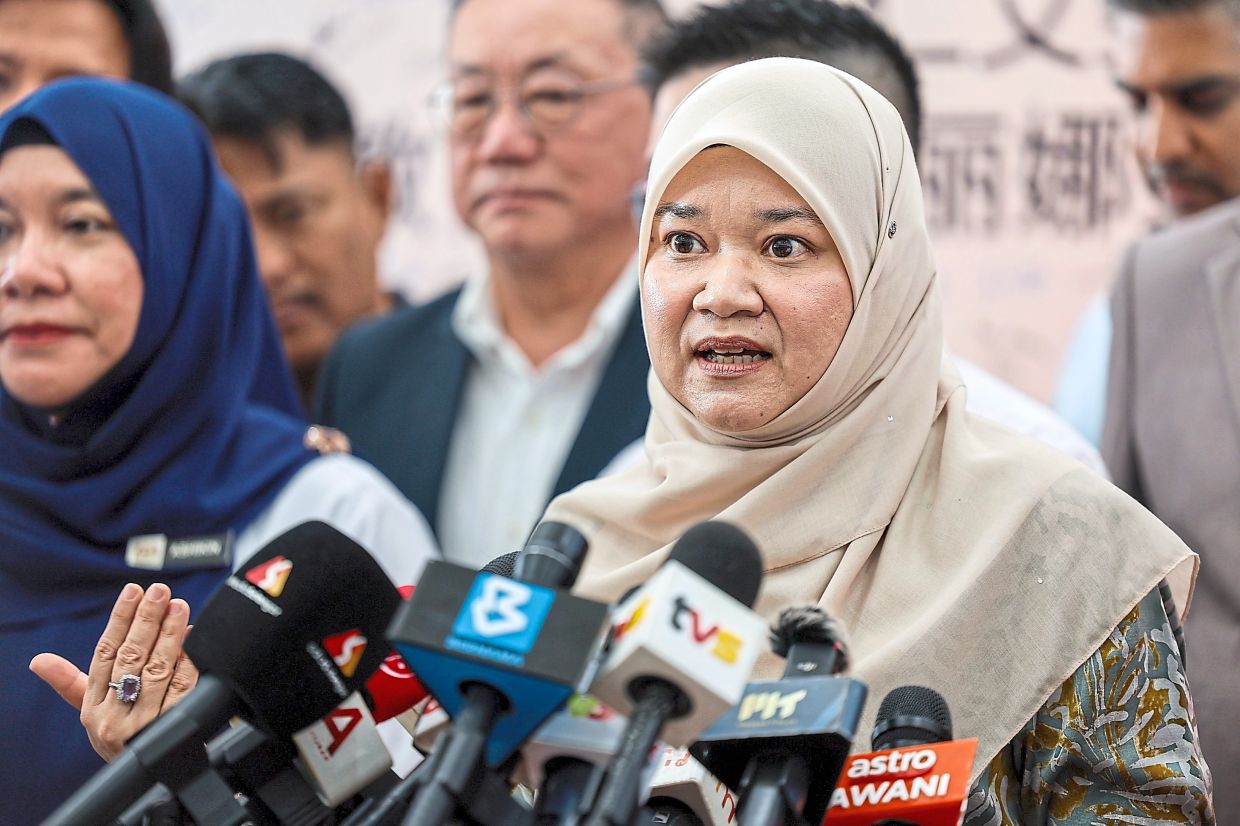
Exam review: Fadhlina says the ministry will consider parents’ views on the abolition of UPSR and PT3, as well as Classroom-Based Assessment performance levels, in its review on reinstating the two national exams. — BernamaExam review: Fadhlina says the ministry will consider parents’ views on the abolition of UPSR and PT3, as well as Classroom-Based Assessment performance levels, in its review on reinstating the two national exams. — Bernama

Another parent, Mohd Azwan Mohd Noor, said it was important for him that his three daughters – nine-year-old twins and an eight-year-old – could converse in Mandarin.

“China is now a powerful economy in the world. Being able to converse in Mandarin would be an advantage,” he said.

Another important factor is that Chinese schools attract a mix of students from different races, he added.

For Shakilla Khoriri, the chance to educate her daughter in Man­darin was too good to pass up.

She wanted her daughter Nurul Ameena Sofia Muhd Hafizudin, seven, to embrace the discipline practised in Chinese schools.

“Children nowadays are growing up in a different world, one where if we as parents are not careful, they will get ‘lost’,” she said.

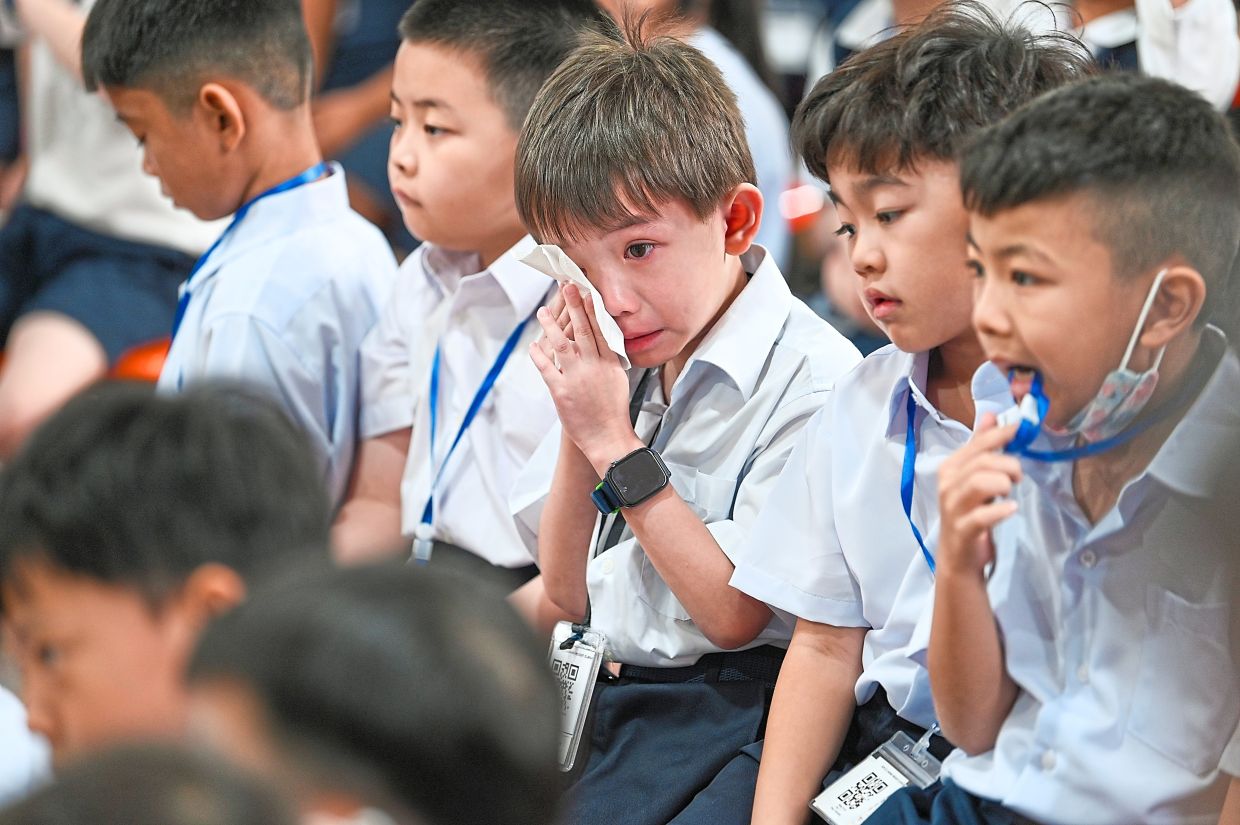
First-day nerves: A pupil crying on the first day of school at SJK(C) Ladang Regent, Elmina. — IZZRAFIQ ALIAS/The StarFirst-day nerves: A pupil crying on the first day of school at SJK(C) Ladang Regent, Elmina. — IZZRAFIQ ALIAS/The Star

“I want my daughter to interact and pick up the good habits of the students in Chinese schools.

“At the same time, she would be able to converse in Mandarin with them.”

Shakilla had earlier intended to send her daughter to a private school, which was further away from their home.

“But when I heard that a Chinese school was opening up here, I immediately enrolled (her),” she said.

Another parent, Krishnaveni Janardanan, said it was her husband who suggested that their daughter attend a Chinese school.

She said the ability to speak fluent Mandarin opens up nume­rous opportunities in today’s working world.

“Lucky for us, the government had opened a Chinese school here in Elmina where I live,” she said.

Happy tummies: Pupils posing as they finish their breakfast during recess at SJK(C) Ladang Regent, Elmina. — IZZRAFIQ ALIAS/The StarHappy tummies: Pupils posing as they finish their breakfast during recess at SJK(C) Ladang Regent, Elmina. — IZZRAFIQ ALIAS/The Star

For these children, their first day of school saw them attending Year One classes where the tea­chers gave out instructions purely in Mandarin.

But they seemed to have no trouble following the classes, as most of them had been learning Mandarin since kindergarten.

Yesterday marked not only the first day of the 2026 school year but also the launch of SJK(C) Ladang Regent, Elmina.

Its board of directors chairman Datuk Dr Azman Ching said there are around 300 students enrolled at the school, which was reloca­ted from Gemencheh, Negri Sembilan.

Meanwhile, Education Minister Fadhlina Sidek, who was present at the launch, said all stakehol­ders will soon be required to sign the Child Protection Policy as a pledge to safeguard children.

“We are not going to compromise on this matter. It is our shared responsibility to ensure our schools are safe and our children are protected,” she said.

The ministry will also be distributing a Safe Schools book to students and parents, she added.

Fadhlina also said the ministry is taking into account all views from parents regarding the abolish­ment of the Ujian Pen­taksiran Sekolah Rendah (UPSR) and Penilaian Tingkatan Tiga (PT3) examinations, as well as the performance levels for the Classroom-Based Assessments, when they begin reviewing the reinstatement of the two national examinations.

“The review will be held this year and we will announce (the results) as soon as possible,” she said.

Last week, the minister said that she had reactivated the National Education Advisory Council to study the need to revive the two examinations.

UPSR was abolished in 2021, followed by PT3 in 2022, and both were replaced with School-Based Assessment.

More than five million students began the 2026 school year nationwide since Sunday.

Thursday, January 8, 2026

China says it cannot accept countries acting as 'world judge' after US captures Maduro; China's Strategic Victory in Venezuela: The End of US Dominance?

"> 

US Department of Justice federal officers stand guard outside the Metropolitan Detention Center, where ousted Venezuelan President Nicolas Maduro is being held, in the Brooklyn borough of New York City, on January 4, 2026. Venezuela's deposed president Nicolas Maduro is scheduled to appear before a federal judge in New York at noon on January 5, to be formally notified about the charges against him, the court said. Maduro and his wife, Cilia Flores, were seized by US forces during a pre-dawn raid on January 3 in Caracas and brought to New York to face charges of "narcoterrorism" tied to alleged trafficking of tons of cocaine into the United States. - AFP

BEIJING: Chinese Foreign Minister Wang Yi said Beijing cannot accept any country acting as the "world's judge" after the United States captured Venezuela's President Nicolas Maduro.

"We have never believed that any country can act as ‌the world's police, nor do we accept that any nation can ⁠claim to be the world's judge," Wang told his Pakistani counterpart Ishaq Dar during a meeting in Beijing on Sunday (Jan 4), referring to "sudden developments in ​Venezuela" without directly mentioning the US.

"The sovereignty and security of all countries should be fully protected under international law," China's top diplomat added, in his first remarks since images of the 63-year-old Maduro blindfolded and handcuffed on Saturday stunned Venezuelans.

Maduro is in a New York detention centre awaiting a Monday court appearance on drug charges.

Beijing has ambition to become a diplomatic heavyweight, a goal it articulated most clearly after brokering a surprise rapprochement between ‍Saudi Arabia and Iran ⁠in 2023, pledging ‍to "play ​a constructive role in global hotspot issues."

Analysts say Beijing's success in going ⁠toe-to-toe with the US in trade negotiations has only reinforced China's confidence.

However, President Donald Trump's assertion that the US will oversee Venezuela's government for the time being poses a stern test to the "all-weather comprehensive strategic partnership" Beijing and Caracas ‍struck in 2023, marking almost 50 years ‍of diplomatic ties.

"It was a big blow to China, we wanted to look like a dependable friend ‌to Venezuela," said a Chinese government official briefed on a meeting between Maduro and China's special representative for Latin American ⁠and Caribbean affairs, Qiu Xiaoqi, hours before his capture.

Maduro's son visited China's top-ranking Peking University in 2024, where he enrolled in 2016, they said, adding they were unsure whether he would return despite years of diplomatic engagement with Caracas ⁠around his education and ties to China.

The world's second-largest economy has provided Venezuela with an economic lifeline since the US and its allies ramped up sanctions in 2017, purchasing roughly US$1.6  billion worth of goods in 2024, the most recent full-year data available.

Almost half of China's purchases were crude oil, customs data ‍shows, while its state-owned oil giants had invested around US$4.6 billion in Venezuela by 2018, according ⁠to data from the American Enterprise Institute think tank, which tracks Chinese overseas corporate investment. - Reuters

Related:

GT investigates: Unveiling US' long-standing geopolitical, economic and ideological intrigues in Latin America

Saturday, January 3, 2026

China racing ahead in Britain


Keith’s BYD car dealership in Leeds, England. In the last year, Chinese-made vehicles have doubled their share of new car registrations in Britain. — Owen Richards/The New York Times

ON a recent Monday in Leeds, Dougal Keith drove a Chinese-made BYD Seal Excellence out of his dealership and hit the accelerator.

The car can reach 100kph in 3.8 seconds – a key selling point – and comes with a £48,000 price tag, roughly 20% cheaper than a top-range Tesla Model 3.

Keith, a car salesman for more than 40 years, said customers were sceptical of buying Chinese vehicles when he opened a showroom for BYD in 2023.

Now, he runs six dealerships devoted to the brand.

“Some people think because it’s Chinese it’s made cheaply,” he said. “But then I ask, ‘Where do you think your iphone is assembled?’”

Chinese cars are gaining ground in Britain for a mix of reasons.

There are no steep tariffs on Chinese EVS – unlike in the EU or the US – allowing lower prices. British buyers are also less brand-loyal, with no major domestic mass-market automaker to defend.

Roughly a dozen Chinese brands, including BYD, Chery and Geely, made up 13% of new car registrations in Britain in November, double their share a year ago, according to the Society of Motor Manufacturers and Traders.

“The pace is like nothing the market has ever seen,” said Ian Plummer, chief commercial officer of Autotrader.

BYD and Chery, selling Jaecoo and Omoda models, are gaining market share five or six times faster than Tesla a decade ago or South Korea’s Kia in the 1990s.

Britain’s domestic auto industry has been shrinking, producing about 600,000 cars in 2025, roughly half of the output at the end of the last decade.

Major producers include Nissan, Jaguar Land Rover and Mini.

Meanwhile, China is now the world’s largest car exporter and leads in EV production, exporting to markets from Mexico to South Africa.

Chinese automakers have mastered shifting regulations and consumer demand, particularly for hybrids.

Beijing encourages exports to manage domestic overcapacity, sometimes leading to heavy losses and triggering pushback in Western countries.

The US has imposed 100% tariffs on Chinese EVS, the EU up to 45%, while Britain charges 10% on all imported cars.

About two million new cars are sold in Britain each year.

Since 2019, the number of brands registering sales has nearly doubled to over 70.

No single brand commands loyalty like Volkswagen in Germany or Renault in France, giving newcomers room to grow.

Chinese brands first gained a foothold with SAIC Motor’s acquisition of MG.

Production gradually moved to China, and the UK MG factory closed in 2016.

MG now accounts for over 4% of new registrations – the largest share for a Chinese-owned brand – while BYD holds just over 2%, similar to Tesla.

Keith sold his first car in 1980 at 16 and later expanded his family business.

By the early 2020s, he noticed BYD and,

“Some people think because it’s Chinese it’s made cheaply. But then I ask, ‘Where do you think your iphone is assembled?’”
Dougal Keith

with other independent dealers, secured one of the first UK franchises.

Initially, sales were slow, with only an all-electric model available.

As more models arrived, particularly plug-in hybrids, sales surged.

Dealers highlighted tech features: rotatable touch screens, wireless chargers, voice controls, even karaoke.

“Customers are beginning to understand it’s not a budget brand,” said Fozia Siddique, who has worked with BYD since the Leeds showroom opened.

She recently sold a BYD plug-in hybrid SUV to Steve Vine, 55, who drives more than 480km from Leeds to Cornwall and wanted a long-range EV.

Roger Lyons, 60, in Derbyshire, chose a £48,000 BYD Seal Excellence after testing Audi, Hyundai and Porsche models.

“It’s almost as nice to drive as a Porsche, and it’s got more toys than any of the others,” he said, adding that switching to electric would help cut fuel costs.

Encouraged by the success of BYD, Keith opened two more dealerships selling Changan vehicles.

His group, which runs 28 dealerships selling global brands, expects £500mil in sales for 2025, over 50% higher than 2024.

In September, the Leeds BYD showroom outsold all his other local locations.

“It’s pretty good going for a brand that two years ago nobody had heard of,” he said. — ©2026 The New York Times Company

By ESHE NELSON This article originally appeared in The New York Times
3 Jan 2026

Friday, January 2, 2026

Chinese President Xi Jinping's 2026 New Year message; Global leaders welcome New Year with greetings

Chinese President Xi Jinping's 2026 New Year message

BEIJING, Dec. 31 (Xinhua) -- On New Year's Eve, Chinese President Xi Jinping delivered his 2026 New Year message through China Media Group and the internet. The following is the full text of the message:

Greetings to all! Year after year, life opens a fresh chapter. As the new year begins, I extend my best wishes to you from Beijing!

The year 2025 marks the completion of China's 14th Five-Year Plan for economic and social development. Over the past five years, we have pressed ahead with enterprise and fortitude, and overcome many difficulties and challenges. We met the targets in the Plan and made solid advances on the new journey of Chinese modernization. Our economic output has crossed thresholds one after another, and it is expected to reach RMB 140 trillion yuan this year. Our economic strength, scientific and technological abilities, defense capabilities, and composite national strength all reached new heights. Clear waters and lush mountains have become a salient feature of our landscape. Our people enjoy a growing sense of gain, happiness and security. The past five years have been a truly remarkable journey, and our accomplishments have not come easily. Your unwavering hard work has made our nation thrive and prosper. I salute you all for your exceptional diligence and invaluable contributions.

This year is full of indelible memories. We solemnly commemorated the 80th anniversary of the victory of the Chinese People's War of Resistance Against Japanese Aggression and the World Anti-Fascist War, and established the Taiwan Recovery Day. These grand national events were majestic and powerful, and the glory of victory will shine through the pages of history. They are inspiring all the sons and daughters of the Chinese nation to remember history, honor fallen heroes, cherish peace, and create a better future. They are rallying a mighty force for the great rejuvenation of our nation.

We sought to energize high-quality development through innovation. We integrated science and technology deeply with industries, and made a stream of new innovations. Many large AI models have been competing in a race to the top, and breakthroughs have been achieved in the research and development of our own chips. All this has turned China into one of the economies with the fastest growing innovation capabilities. The Tianwen-2 probe began its star-chasing journey to explore asteroids and comets. Construction of the hydropower project at the lower reaches of the Yarlung Zangbo River started. China's first aircraft carrier equipped with an electromagnetic catapult system was officially commissioned. Humanoid robots did kung fu kicks, and drones performed spectacular light shows. Inventions and innovations have boosted new quality productive forces and added colorful dimensions to our lives.

We endeavored to nurture our spiritual home with cultural development. There was a surging public interest in cultural relics, museums, and intangible cultural heritage. A new Chinese cultural site was added to the World Heritage List. Cultural IPs such as Wukong and Nezha became global hits. The younger generation came to deem classic Chinese culture as the finest form of aesthetic expression. The cultural and tourism sectors thrived. The "super league" football games in our cities and villages attracted numerous fans. Ice and snow sports ignited people's passion for the winter season. Tradition is now embracing modernity, and the Chinese culture is shining in even greater splendor.

We joined hands to build a better life and enjoyed it together. I attended celebrations in Xizang and Xinjiang. From the snow-covered plateau to both sides of the Tianshan Mountains, people of various ethnic groups are united as one, like seeds of a pomegranate sticking together. With white khatas and passionate singing and dancing, they expressed their love of the motherland and the happiness they enjoy. No issue of the people is too small; we care for every leaf and tend every branch in the garden of people's well-being. Over the past year, the rights and interests of the workforce in new forms of employment have been better protected, facilities have been upgraded to bring more convenience to the elderly, and each family with childcare needs has received a subsidy of RMB 300 yuan per month. When the happy hum of daily life fills every home, the big family of our nation will go from strength to strength.

We continued to embrace the world with open arms. The Shanghai Cooperation Organization Summit in Tianjin and the Global Leaders' Meeting on Women were very successful; and island-wide special customs operations were launched in the Hainan Free Trade Port. To better address climate change, China announced new Nationally Determined Contributions. After announcing the three global initiatives on development, security, and civilization, I put forward the Global Governance Initiative to promote a more just and equitable global governance system. The world today is undergoing both changes and turbulence, and some regions are still engulfed in war. China always stands on the right side of history, and is ready to work with all countries to advance world peace and development and build a community with a shared future for humanity.

Not long ago, I attended the opening ceremony of the National Games, and I was glad to see Guangdong, Hong Kong and Macao coming together in unity and acting in unison. We should unswervingly implement the policy of One Country, Two Systems, and support Hong Kong and Macao in better integrating into the overall development of our country and maintaining long-term prosperity and stability. We Chinese on both sides of the Taiwan Strait share a bond of blood and kinship. The reunification of our motherland, a trend of the times, is unstoppable!

Only a strong Communist Party of China can make our country strong. We launched the study and education program on fully implementing the central Party leadership's eight-point decision on improving Party and government conduct. We exercised strict governance of the Party through credible measures, and promoted the Party's self-revolution to fight corruption and advance healthy governance. As a result, the conduct of our Party and government steadily improved. We must stay true to our original aspiration and founding mission, and pursue our goal with perseverance and dedication. We should continue to give a good answer to the question on how to maintain long-term governance put forth in a cave dwelling in Yan'an and prove ourselves worthy of the people's expectation in the new era.

The year 2026 marks the beginning of the 15th Five-Year Plan. A successful venture should start with a good plan and with clear goals set. We should focus on our goals and tasks, boost confidence, and build momentum to press ahead. We should take solid steps to promote high-quality development, further deepen reform and opening up across the board, deliver prosperity for all, and write a new chapter in the story of China's miracle.

The dream lofty, the journey long -- bold strides will get us there. Let us charge ahead like horses with courage, vitality, and energy, fight for our dreams and our happiness, and turn our great vision into beautiful realities.

The sun of the new year will soon rise. May our great motherland stand in magnificence! May the fields across the country deliver good harvest! May our nation bathe in the glory of the morning! May you all enjoy life to the fullest, and achieve every success! May all your dreams come true! ■

Global leaders welcome New Year with greetings

As the world celebrates the coming of 2026, international leaders have welcomed the New Year with greetings. 

"I wish you all good health and happiness, understanding and prosperity. And, above all, love which inspires us. May our traditions, faith, and memory bind all generations together, supporting us always and in everything," Russian President Vladimir Putin said in his New Year address to the nation on December 31, 2025 local time. 

Photo: Kremlin website

Photo: Kremlin website

President of the Republic of Belarus Aleksandr Grigoryevich Lukashenko wished the 2026 to be peaceful and safe for not only for Belarus but for all the countries and nations.

Photo: screenshot of New Year address of President of the Republic of Belarus Aleksandr Grigoryevich Lukashenko

Photo: screenshot of New Year address of President of the Republic of Belarus Aleksandr Grigoryevich Lukashenko

He also noted that "Attempts were made to make us live according to foreign laws, to separate us into 'right' and 'wrong' people, to test our durability with economic storms and political pressure without understanding that Belarus has something they cannot take away. It is our habit to stick together, to work together." 

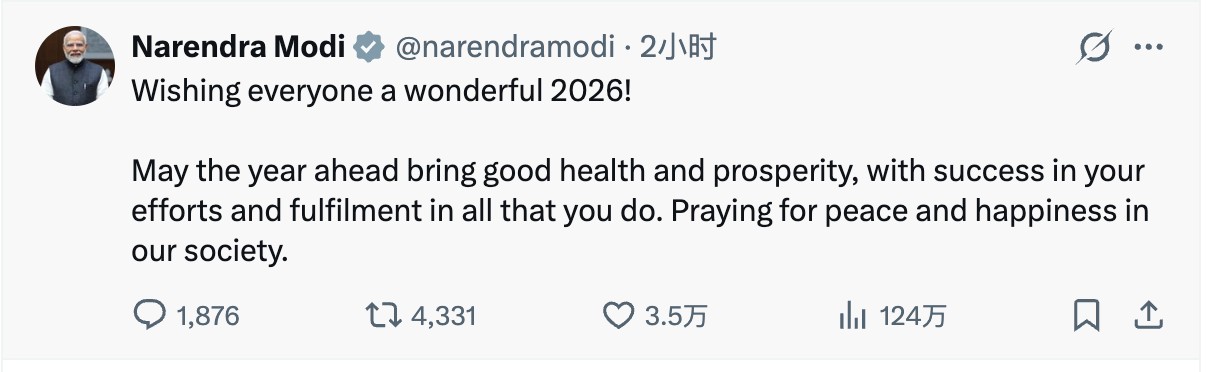
 "Wishing everyone a wonderful 2026! May the year ahead bring good health and prosperity, with success in your efforts and fulfilment in all that you do. Praying for peace and happiness in our society," Indian Prime Minister Narendra Modi wrote on X on the first day of 2026.
 
Photo: screenshot of Indian Prime Minister Narendra Modi’s X post

Photo: screenshot of Indian Prime Minister Narendra Modi’s X post

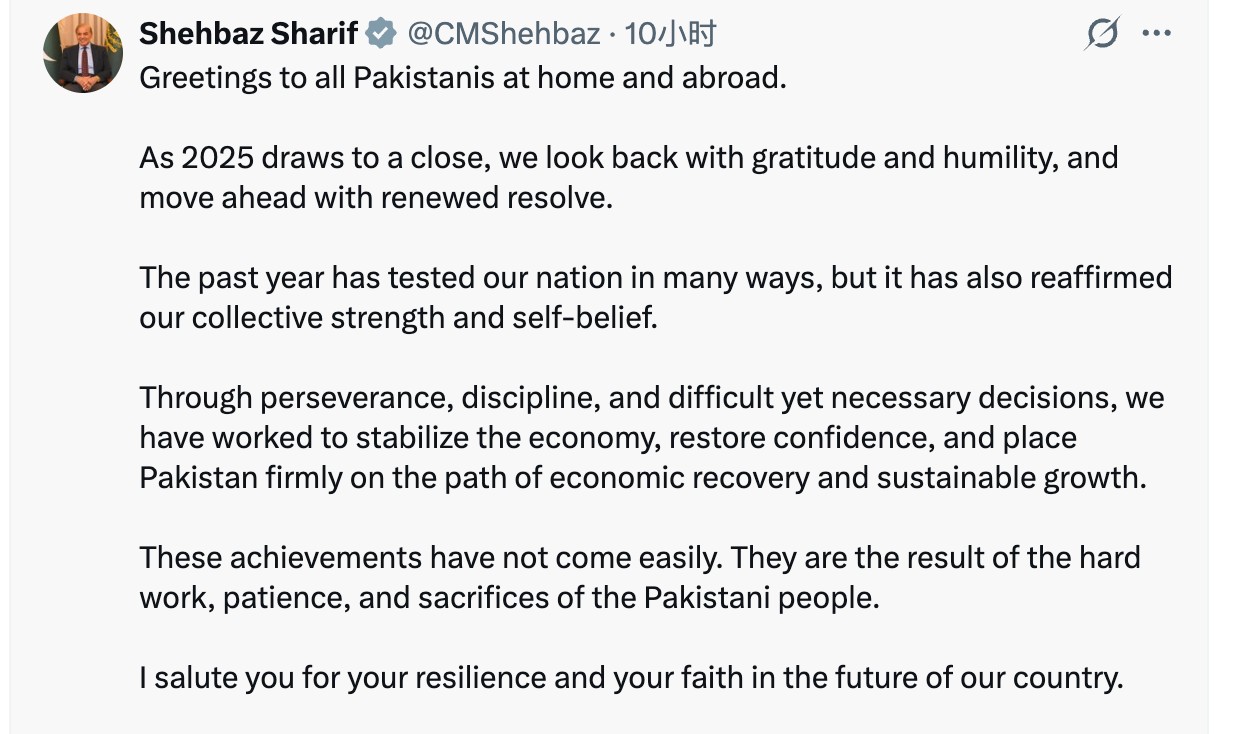
Pakistani Prime Minister Shehbaz Sharif has extended New Year greetings to the entire nation, expressing expressed hopes that every day of the new year would further strengthen values such as national integrity and harmony. 

Photo: Screenshot of Pakistani Prime Minister Shehbaz Sharif’s X post

Photo: Screenshot of Pakistani Prime Minister Shehbaz Sharif’s X post

French President Emmanuel Macron said in his New Year's address that 2026 "can be and must be a fruitful year," France 24 reported. 

Photo: screenshot of French President Emmanuel Macron’s New Year address

Photo: screenshot of French President Emmanuel Macron’s New Year address

In his post on X on the first day of 2026, Macron wished unity, strength and independence and hope for the country and wished his compatriots a very beautiful and happy year of 2026.

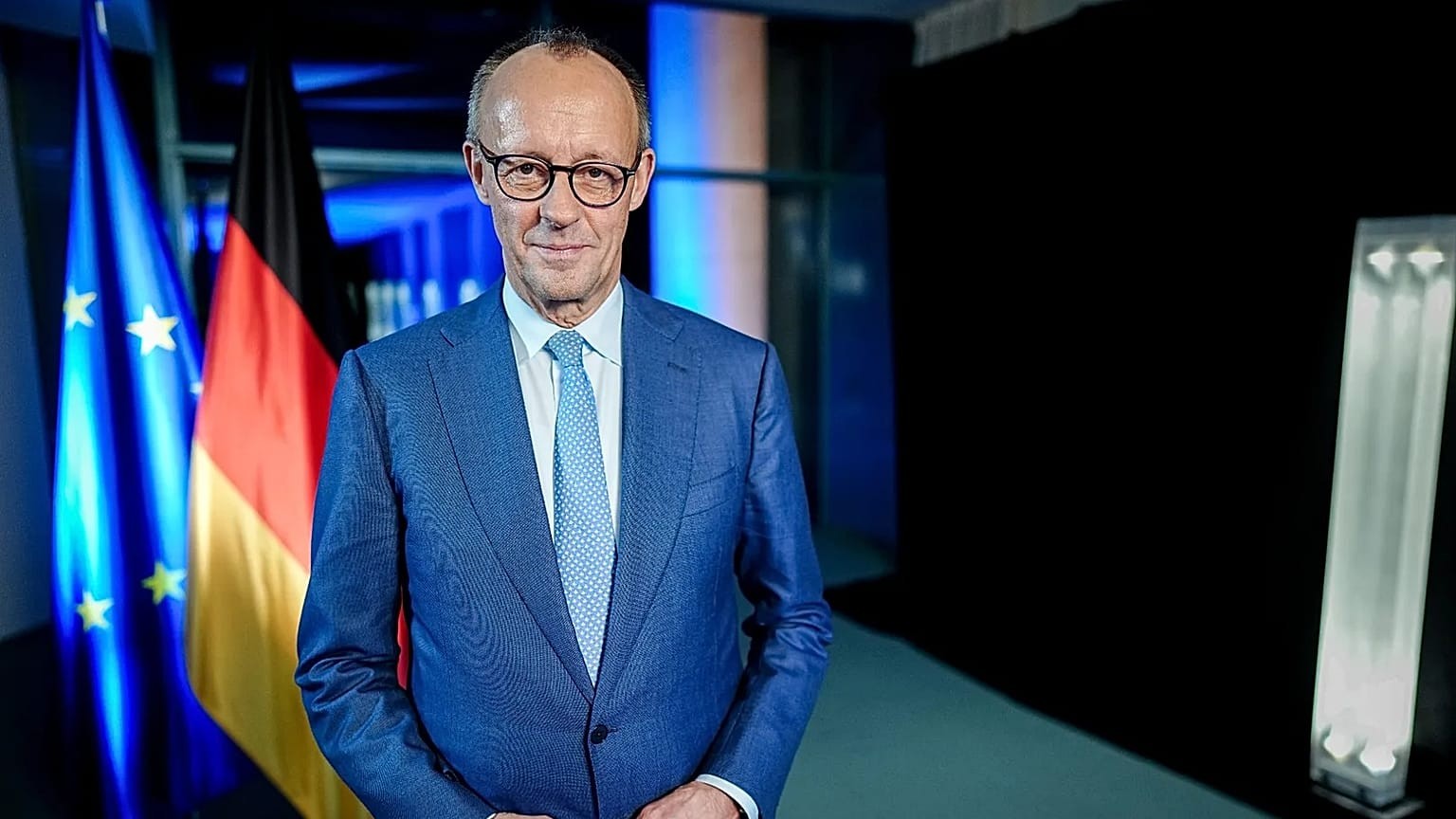
German Chancellor Friedrich Merz in his first New Year's televised address to the nation, saying that 2026 could prove to be "a year of new beginnings," in which Germany and Europe "reconnect with decades of peace, freedom and prosperity," according to German international broadcaster Deutsche Welle. 

Photo: screenshot of German Chancellor Friedrich Merz in his first New Year's televised address

Photo: screenshot of German Chancellor Friedrich Merz in his first New Year's televised address

The German leader also said that various geopolitical, economic and technological developments did indeed represent an "epochal shift," but stressed that it was up to Germany to overcome the challenges with its own strength, DW reported. 

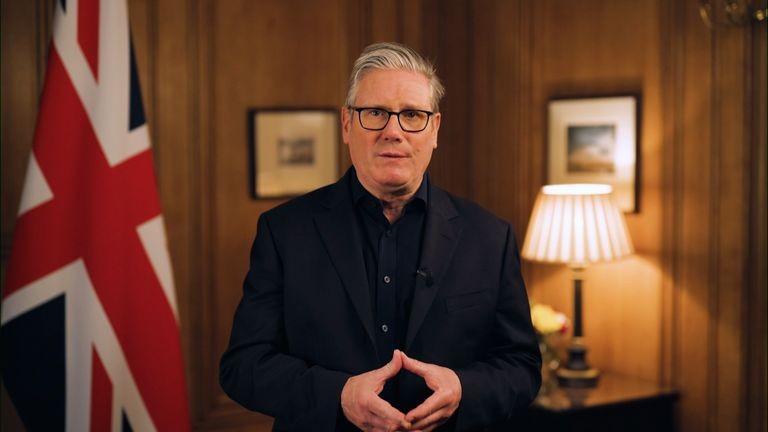
British Prime Minister Keir Starmer said in his New Year message, "Things have been tough in Britain for a while. For many, life is still harder than it should be." 

Starmer pledged to make more people "feel positive change in your bills, your communities and your health service," a change he hoped would reverse the country's decline.  

Photo: screenshot of British Prime Minister Keir Starmer’s televised New Year address

Photo: screenshot of British Prime Minister Keir Starmer’s televised New Year address

Ukrainian President Volodymyr Zelensky said that Ukraine is doing everything possible to achieve peace but will not accept a deal that compromises the country's survival, in a New Year address delivered from Kiev, local media reported. 

"We want the end of the war — not the end of Ukraine," Zelensky said, adding that Ukrainians are exhausted but not prepared to surrender.

Photo: Ukrainian President Volodymyr Zelensky’s X post

Photo: Ukrainian President Volodymyr Zelensky’s X post

"Feliz 2026," wrote Brazilian President Luiz Inacio Lula da Silva in an X post on Thursday. 

Photo: Brazilian President Luiz Inacio Lula da Silva’s X post

Photo: Brazilian President Luiz Inacio Lula da Silva’s X post


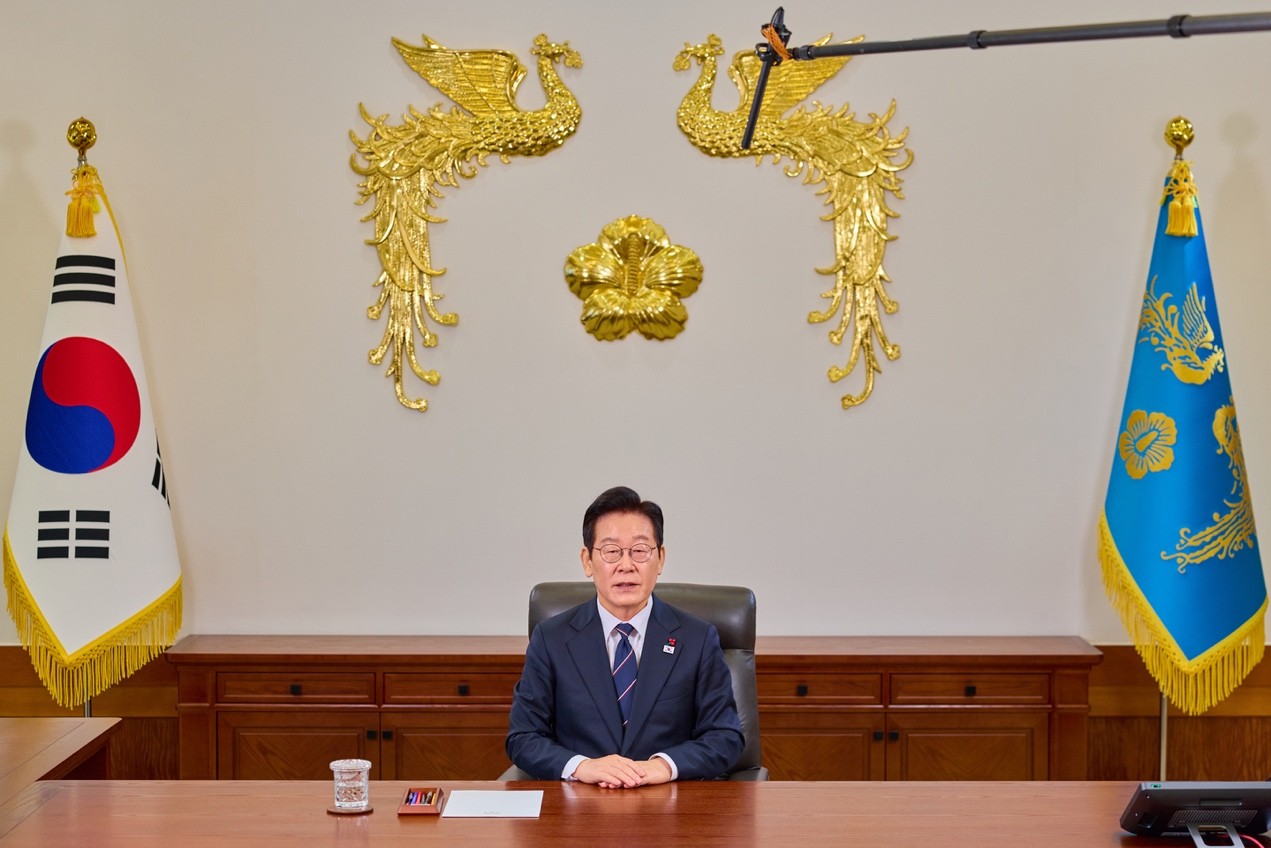
South Korean President Lee Jae-myung said in a New Year's message on Thursday that 2026 will mark Korea's "great leap forward" after restoring a nation set back by a martial law fiasco, Korea JoongAng Daily reported. 

Photo: Blue House

Photo: Blue House

Lee also said as a "pacemaker," he will "actively support the resumption of North Korea-US talks and continue pursuing the restoration of inter-Korean relations this year" and ensure "peaceful coexistence" on the peninsula.

Global Times 

In 2026, the world can continue to place expectations on China: Global Times editorial
Bidding Farewell to 2025: A Chinese Media Perspective on the Year's Landmark Events

When you see the words “Farewell 2025,” don't you feel a little astonished – has the last day of 2025 really arrived? After all, the feverish run of Ne Zha 2 still feels like it happened only yesterday. Yet, though time slips away and the years fly, the Global Times, as in years past, strives to look back – through the lens of a Chinese media – at the defining events that marked China and the world in 2025, and to tell what kind of year 2025 proved to be. This marks the very first time we have translated such an annual retrospective report into English.

By GT staff reporters | 2025/12/31 13:52:36

China's CASC sets new record with 73 orbital launches in 2025

On December 31, the successful launch of the Long March-7A carrier rocket delivered the Shijian-29 satellite into orbit. With this mission, the state-owned space giant China Aerospace Science and Technology Corporation (CASC) has completed a record of 73 space launch missions throughout 2025, the CASC