src='https://pagead2.googlesyndication.com/pagead/js/adsbygoogle.js?client=ca-pub-2513966551258002'/> Rightways: Russia Infolinks.com, 2618740 , RESELLER

Pages

Share This

Deepseek https://www.deepseek.com/./深度求索 DeepSeek | 深度求索 https://askaichat.app/chat
Showing posts with label Russia. Show all posts

Thursday, May 21, 2026

Head-of-state diplomacy guides China-Russia relations to ‘new heights’

 Photo: Xinhua

Photo: Xinhua


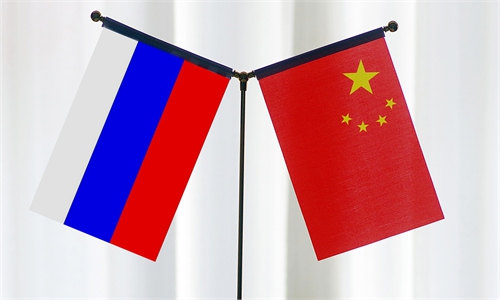
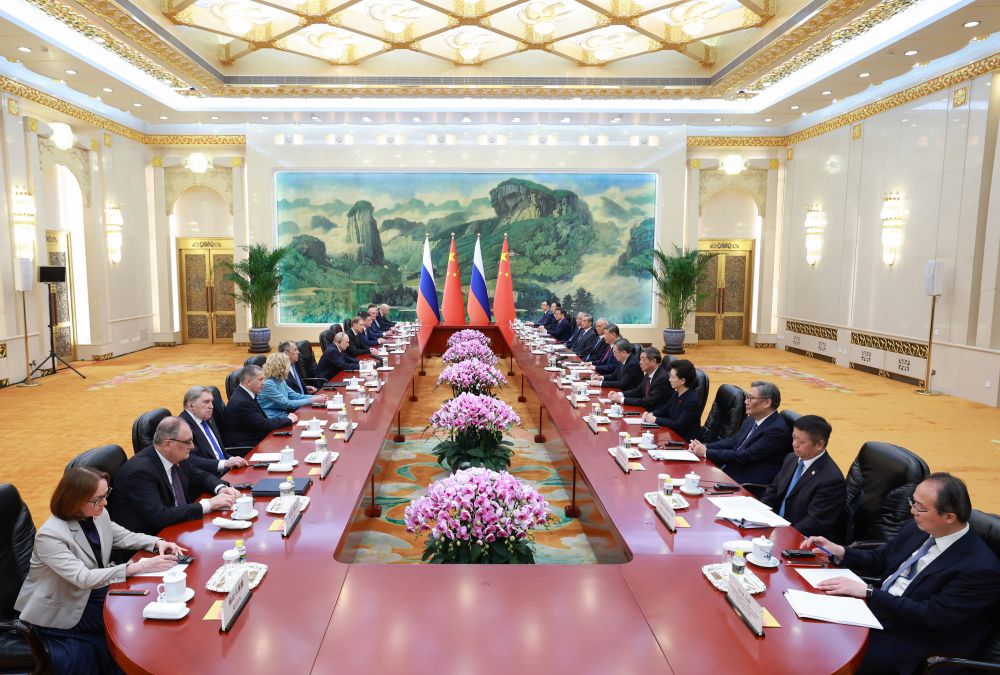
On May 20, Beijing witnessed another important moment in the development of China-Russia relations. Chinese President Xi Jinping held talks with visiting Russian President Vladimir Putin at the Great Hall of the People in Beijing on Wednesday, with the two sides agreeing to further extend the China-Russia Treaty of Good-Neighborliness and Friendly Cooperation.

President Xi outlined efforts to promote higher-quality development of China-Russia relations in four dimensions, during a joint press meeting with President Putin after the talks: First, Xi called for efforts to consolidate higher-quality political mutual trust and strengthen strategic support for each other; second, Xi stressed the need for China and Russia to empower higher-quality mutually beneficial cooperation and jointly promote their respective development and revitalization; third, Xi stressed the need to promote higher-quality people-to-people exchanges and strengthen the foundation for lasting friendship between the two peoples across generations; and fourth, Xi called on China and Russia to pursue higher-quality international coordination and work together to reform and improve global governance. These four dimensions clearly chart a path for the higher-quality development of China-Russia relations from a new starting point.

This visit yielded fruitful outcomes and carried far-reaching significance. The two heads of state signed a joint statement on further enhancing the comprehensive strategic coordination and deepening good-neighborliness and friendly cooperation between the two countries, and witnessed the conclusion of a number of important bilateral cooperation documents. The two countries also issued a joint statement on promoting a multipolar world and a new type of international relations. In addition, the two heads of state also attended the opening ceremony of the China-Russia Years of Education. In a single day, such an intensive schedule of activities, with so many major outcomes being introduced one after another, is fully evident that, under the strategic guidance of the two heads of state, the China-Russia comprehensive strategic partnership of coordination for a new era is characterized by full substance, a high level of mutual trust, a solid foundation, and broad prospects.

Standing at the historical juncture marking the 30th anniversary of the establishment of the China-Russia strategic partnership of coordination, the 25th anniversary of the signing of the China-Russia Treaty of Good-Neighborliness and Friendly Cooperation, and the launch year of the China-Russia Years of Education, the two heads of state once again held face-to-face communication. This not only injects new political momentum into bilateral relations, but also sends a clear signal of stability, cooperation, and mutual benefit to the world. This shows that the two countries regard the development of bilateral relations as a long-term strategic choice, rather than a matter of expediency. As President Xi emphasized, "As permanent members of the UN Security Council and important major countries in the world, China and Russia should take a strategic and long-term perspective, drive the development and revitalization of our respective countries through comprehensive strategic coordination of even higher quality, and work to make the global governance system more just and reasonable."

What does a strategically far-sighted China-Russia relationship mean for the world? First, it means a stronger safeguard for global peace and stability. By upholding the international system centered on the United Nations and adhering to the purposes and principles of the UN Charter, China and Russia serve as key forces in opposing hegemony, promoting multipolarity, and stabilizing the global situation. Moreover, the forces defending international fairness and justice have become stronger. China and Russia maintain close ties under multilateral frameworks such as the United Nations, the Shanghai Cooperation Organization (SCO), BRICS, and the G20, jointly safeguarding the legitimate development rights and interests of Global South countries. Both sides remain firmly committed to defending the post-World War II international order and the authority of international law, opposing all forms of unilateral bullying and actions that seek to reverse the course of history, especially provocations that deny the outcomes of World War II and attempt to whitewash and revive fascism and militarism. Together, they are working to build a more just global governance system. History shows that when China and Russia stand firmly together, there is greater hope for international fairness and justice, greater certainty amid once-in-a-century global changes, and greater strength for human progress and development.

At present, the international landscape is marked by turbulence and uncertainty, with various forms of "unpredictability" posing major challenges to peace and development. Against this backdrop, China and Russia's willingness and ability to "take a strategic and long-term perspective" is itself an important contribution to the international community. This strategic resolve demonstrates that the two countries consistently uphold the principles of "non-alliance, non-confrontation, and not targeting any third party." They adhere to equality, mutual respect, good faith, and win-win cooperation. The China-Russia relationship, which transcends traditional military and political alliances, is a model for interactions between major powers and neighboring countries alike. It possesses strong internal momentum and enduring strategic resilience, and has become a key stabilizing factor amid global uncertainty.

Under the strategic guidance of the two heads of state, China-Russia relations have reached a new starting point. China-Russia comprehensive strategic partnership of coordination is not about creating confrontation, but about opposing hegemony; not about exclusivity, but about upholding multilateralism; not about zero-sum rivalry, but about promoting common security and shared development. The China-Russia relationship that has entered a new stage of "greater achievements and faster development" aligns with the global trend toward peace, development, cooperation, and mutual benefit. It benefits both countries and the world.

China and Russia are good neighbors and friends who stand together through adversity; and valuable partners that help each other succeed. Standing at a new historical starting point, China-Russia relations will continue to maintain strategic resolve amid changing global circumstances, unleash potential through mutually beneficial cooperation, and demonstrate responsibility amid international transformation. As the two countries move together toward a future of higher-quality development, they will inject strong momentum into each other's growth and national rejuvenation. China-Russia close strategic coordination on the international stage will also continue to serve as an important stabilizing force in a turbulent world, making irreplaceable contributions as major countries to safeguarding international fairness and justice and to building a more just and reasonable global governance system.

Related posts:


  China US Photo: VCG US President Donald Trump concluded his state visit to China on Friday afternoon and departed Beijing on Air Force


RELATED ARTICLES
Monday, September 1, 2025

Global power converge in Tianjin: SCO summit

 China hosts a star-studded summit to showcase its glowing influence


In this photo provided by Indian Prime Minister's Office, Indian Prime Minister Narendra Modi, left, and Chinese President Xi Jinping, right, hold a meeting on the sidelines of the Shanghai Cooperation Organization (SCO) summit in Tianjin, China Sunday, Aug. 31, 2025. (Indian Prime Minister's Office via  AFP  https://www.youtube.com/watch?v=ZfDuPX3p9Y0

President Xi Jinping gathered the leaders of Russia and India among dignitaries from around 20 Eurasian countries for a showpiece summit aimed at putting China front and centre of regional relations.

Security was tight in the northern port city of Tianjin, where the Shanghai Cooperation Organi­sation (SCO) summit is being held until today, days before a massive military parade in the capital Beijing to mark 80 years since the end of World War II.

The SCO comprises China, India, Russia, Pakistan, Iran, Kazakhstan, Kyrgyzstan, Tajikistan, Uzbekistan and Belarus – with 16 more countries affiliated as observers or “dialogue partners”.

Russian President Vladimir Putin touched down in Tianjin yesterday with an entourage of senior politicians and business representatives. 

Meanwhile, Xi held a flurry of bilateral meetings with leaders from the Maldives, Azerbaijan, Kyrgyzstan and one of Putin’s staunch allies, Belarusian President Alexander Lukashenko.

He also met India’s Prime Minister Narendra Modi, Xinhua news agency reported.

China and Russia have sometimes touted the SCO as an alternative to the Nato military alliance. This year’s summit is the first since US President Donald Trump returned to the White House.

In an interview published by Xinhua on Saturday, Putin said the summit will “strengthen the SCO’s capacity to respond to contemporary challenges and threats, and consolidate solidarity across the shared Eurasian space”.

“All this will help shape a fairer multipolar world order,” Putin said.

As China’s claim over Taiwan and Russia’s invasion of Ukraine have seen them clash with the United States and Europe, experts say that Beijing and Moscow are eager to use platforms such as the SCO to curry favour.

“China has long sought to present the SCO as a non-Western-led power bloc that promotes a new type of international relations, which, it claims, is more democratic,” said Dylan Loh, an assistant professor at Singapore’s Nanyang Technological University.

More than 20 leaders including Iranian President Masoud Pezeshkian and his Turkish counterpart Recep Tayyip Erdogan are attending the bloc’s largest meeting since its founding in 2001.

“The large-scale participation indicates China’s growing influence and the SCO’s appeal as a platform for non-Western countries,” Loh added.

Beijing, through the SCO, will try to “project influence and signal that Eurasia has its own institutions and rules of the game”, said Lizzi Lee from the Asia Society Policy Institute.

“It is framed as something different, built around sovereignty, non-interference, and multipolarity, which the Chinese tout as a model,” Lee said.

Putin needs “all the benefits of SCO as a player on the world stage”, said Lim Tai Wei, a professor and East Asia expert at Japan’s Soka University. — AFP

Xi calls for forging ahead with solid steps as SCO convenes largest-ever summit

Chinese President Xi Jinping on Monday called on Shanghai Cooperation Organization (SCO) members to forge ahead with solid steps for ...

Xi proposes Global Governance Initiative

Chinese President Xi Jinping on Monday proposed the Global Governance Initiative (GGI) at the "Shanghai Cooperation Organization Plus" Meeting in ...


SCO Tianjin Summit showcases the charm of genuine multilateralism: Global Times editorial

The SCO has not only inherited and advanced the multilateral framework represented by the UN but has also innovated and reshaped its concepts and pathways under new circumstances. The SCO has become both a staunch defender and a benchmark practitioner of multilateralism at a time when this principle of international engagement is under severe erosion worldwide.


14 hours ago — The aircraft carrying the Prime Minister and his wife Datuk Seri Dr Wan Azizah Wan Ismail landed at the Tianjin Binhai International Airport.


Top stories


 professor and East Asia expert at Japan’s Soka University. — AFP

Wednesday, May 7, 2025

Fostering a right view of WWII history essential for upholding international fairness and justice

>  

;


Photo: VCG


Chinese President Xi Jinping will pay a state visit to Russia from May 7 to 10 and attend the celebrations marking the 80th anniversary of the Victory in the Great Patriotic War in Moscow, at the invitation of President Vladimir Putin of the Russian Federation. This year marks the 80th anniversary of the victory of the Chinese People's War of Resistance Against Japanese Aggression, the Great Patriotic War of the Soviet Union and the World Anti-Fascist War. Xi's Russia visit will not only deepen bilateral ties at the level of head-of-state diplomacy but will also hold broader significance for the world.

The international order is currently facing multiple shocks, and the underlying causes are closely linked to the erosion of the view of the World War II (WWII) history. 

The rise of unilateralism has broken with the post-war tradition of multilateral cooperation; the spread of historical revisionism has intensified the fragmentation of international norms; and the resurgence of exclusionary ideologies has led to social division. Some right-wing politicians use various means to obscure and distort the history of WWII, while others seek to gain political benefits and solidify their positions by whitewashing fascism. Even more dangerously, the flawed historical view is feeding a vicious cycle alongside geopolitical conflicts: In an attempt at containment, they denigrate - or even deny - the historical contributions of China and Russia; and in the name of a "free and open Indo-Pacific," they seek to breach the pacifist postwar constitution and resurrect military adventurism.

Against this backdrop, the joint advocacy by China and Russia to foster a right view of the WWII history, defend the outcomes of the victory in the war and the post-war international order, and uphold international fairness and justice serves as an important guiding force for maintaining world peace and stability.

The war that successfully ended 80 years ago was fundamentally a battle between justice and evil. It was a magnificent feat of the international community overcoming boundaries of nation, race, and ideology to unite against fascist aggression. From the Normandy landings in Europe to the Pacific theater in Asia, from the Battle of Stalingrad to China's brave resistance against Japanese invasion, and across Asia, Africa, and Latin America, countries joined forces in an unprecedented effort to defeat the Axis powers' imperial ambitions. This demonstrated the unparalleled power of multilateral cooperation in the face of global threats. 

We will also never forget that the victory of the Chinese People's War of Resistance Against Japanese Aggression was inseparable from the robust support of the international community. The Soviet Union's dispatch of troops to Northeast China hastened the collapse of Japanese imperialism; the US supplied China with aircraft and artillery under the Lend-Lease; and the 1943 Cairo Declaration expressly demanded that Japan return all the Chinese territories it had seized - including Taiwan. 80 years ago, the vast majority of the world's nations stood shoulder to shoulder against a common foe in pursuit of a shared ideal of peace - a fact that all humanity should remember forever.

The victory in WWII was a triumph of multilateral cooperation that transcended different systems and beliefs, overcoming fascist tyranny. This proves that the law of the jungle, where the strong prey on the weak, is not the right path for human development. It laid the foundation for an international order centered on the United Nations and gave rise to a wave of national liberation and peaceful development based on equality and self-determination among all nations. Fostering a right view of WWII history is also about defending a proper view of the international order.

The construction of the postwar international system further proved that multilateralism is not a temporary strategy in the game of great powers, but a conscious choice of civilization born from immense sacrifice. As the main theater in the East during World War II, China was not only a significant contributor to the World Anti-Fascist War but also a builder and maintainer of the post-war international order. China has always advocated the Five Principles of Peaceful Coexistence and has played a constructive role in alleviating regional crises through active diplomatic mediation. From proposing the concept of building a community with a shared future for mankind to introducing three major global initiatives, China is actively demonstrating what it means to uphold and defend a right view of WWII history. It is providing the world with a Chinese solution that transcends zero-sum games and promotes the development of the international order in a just and reasonable direction.

Standing at the crossroads of changes unseen in a century, humanity needs to learn from historical experience of WWII victory more than ever. As former German president Richard von Weizaecker said, "those who do not review history will be blind to reality." Promoting a correct understanding of World War II is inherently linked to upholding a just international order. Whether mediating regional conflicts or addressing global crises, countries must learn from history and adhere to the just principles established after the war. Only by anchoring ourselves in a correct historical perspective can humanity maintain a baseline of peace amid potential risks of de-globalization and conflict.

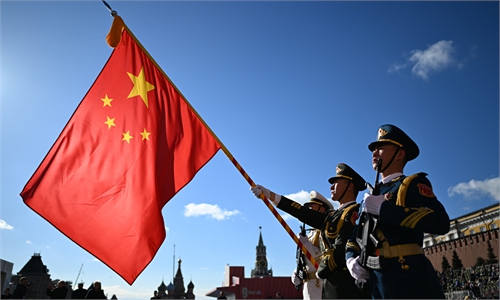
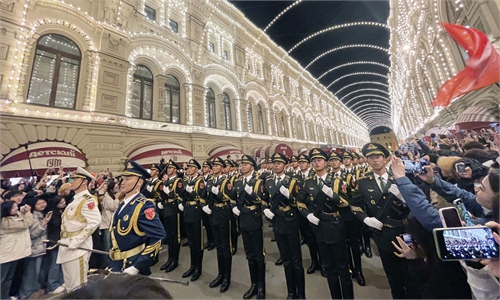
"Justice will prevail! Peace will prevail! The people will prevail!" These slogans were shouted by the Guard of Honor of the Chinese People's Liberation Army during the nighttime rehearsal for the Victory Day parade on May 9 in Moscow's Red Square, eliciting waves of cheers and applause from the audience. The three declarations of "will prevail" and the warm reception of the PLA are concrete manifestations of the appreciation and support for upholding and promoting a right view of WWII history. More people standing on the side of defending the right view of WWII history and upholding post-war international fairness and justice is the best way to commemorate the victory of the World Anti-Fascist War. - Global Times editorial

RELATED ARTICLES
PLA Guard of Honor stuns at Red Square Victory Day parade, proud embodiment of China's national image

On Friday, the Red Square in Moscow, Russia was adorned with vibrant displays of military pride and historical reverence during ...


China and Russia, through their cooperation in AI, can set a great example and contribute to the emancipation of the Global South in the realms of science, culture and education, says Russian exper