src='https://pagead2.googlesyndication.com/pagead/js/adsbygoogle.js?client=ca-pub-2513966551258002'/> Rightways: Vernacular schools Infolinks.com, 2618740 , RESELLER

Pages

Share This

Deepseek https://www.deepseek.com/./深度求索 DeepSeek | 深度求索 https://askaichat.app/chat
Showing posts with label Vernacular schools. Show all posts

Wednesday, July 29, 2026

TCM mak­ing global moves from clinic coun­ters into every­day life, No longer just an exotic alternative

Right dose: A pharmacist preparing Chinese herbal medicine for a patient in Qianmen, Beijing. — Xinhua

In the heart of Germany, a traditional Chinese herbal product has secured a lasting place on the shelves of the renowned Bahnhof-Apotheke pharmacy chain for over six years, with nearly 200,000 bottles of Shufeng Jiedu granules sold to date.

Priced at €39.90 (RM186) per bottle, this respiratory relief formula is among more than a dozen products from Anhui Jiren Pharmaceutical Co Ltd in eastern China, exemplifying the global journey of traditional Chinese medicine (TCM).

This journey is no longer limited to classic remedies stored behind pharmacy counters.

Since last year, a “Four Seasons Tea” based on TCM principles has been offered not only in German pharmacies but also on the menu of a tea house in Hamburg, ser­ving as a daily wellness supplement.

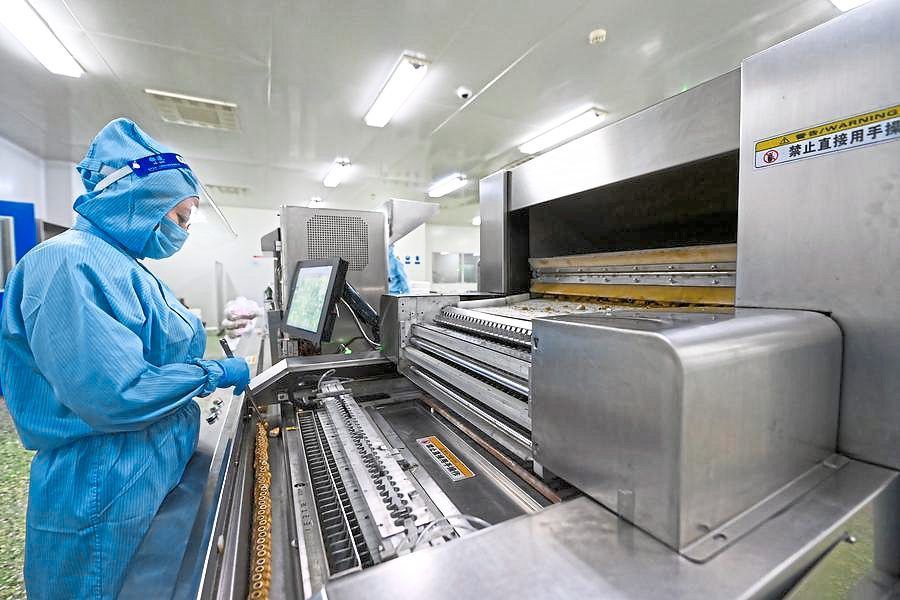
Behind the scenes: A staff member working at a plant of the Tianjin Pharmaceutical Da Ren Tang Group Co Ltd in Tianjin. — Xinhua

“From treatment to wellness, we seek to integrate TCM’s health-preserving culture into the daily lives of Europeans,” said Zhu Qiang, deputy general manager of Anhui Jiren Pharma­ceutical.

Once regarded as an exotic alternative, TCM is now expanding its global presence and joining the worldwide conversation on health and lifestyle.

To progress from cultural curiosity to global acceptance, TCM first had to tackle a fundamental challenge: making the “inexplicable” explicable.

The empirical nature of TCM, coupled with the complexity of herbal formulas, has long puzzled international regulators and scientists.

For instance, the same herb may either promote or stanch blood flow, depending on its combination with other ingredients.

The response has been a systematic drive towards standardisation.

China has facilitated the establishment of a technical committee under the International Organization for Standardization, which has so far issued over 100 international standards for TCM.

Pioneering institutions have also played a key role.

For example, Tianjin University of Traditional Chinese Medicine has led the creation of the world’s first international educational standard for TCM undergraduate programmes.

On the corporate front, major Chinese pharmaceutical companies have diligently pursued international certifications.

Tianjin Pharmaceutical Da Ren Tang Group Co Ltd has obtained certifications recognised in Australia and Japan.

As early as 1997, its product Suxiao Jiuxin Pills, a compound emergency medicine for heart attacks, was successfully registered as a prescription drug in Russia.

Anhui Jiren Pharmaceutical entered the European market in 2018, and 193 of its TCM granule varieties have passed official German quality inspections and are available in the EU market.

“We are exploring new approaches to bring more products to the global market, including strengthening ties with overseas research institutions to prove TCM’s efficacy with scientific evidence,” Zhu Qiang said.

Data from China’s National Administration of Traditional Chinese Medicine showed that TCM is now practised in 196 countries and regions.

China has also signed TCM cooperation agreements with over 40 foreign governments and international organisations.

Beyond documentation, transformation is underway on factory floors and in research labs, where intelligent technology is decoding herbal wisdom and demonstrating its mechanisms through data.

At the digitalised workshop in a Tianjin Pharmaceutical Da Ren Tang plant, Suxiao Jiuxin Pills roll off automated production lines. Each bottle carries a QR code that allows consumers to trace the medicine’s journey – from the specific herb plantation to every step of processing, storage and quality control.

“We use digital control to tackle the pain point of batch-to-batch variation in herbal products, ensuring both efficacy and stabi­lity,” explained Li Hongjiang, the plant’s production deputy general manager.

The upcoming new generation intelligent workshop, with an investment exceeding 300 million yuan (RM181mil), will use near-infrared spectroscopy and visual inspection systems to further enhance precision, Li added.

Artificial intelligence (AI) is also scaling up TCM production.

Remedy for all: People visiting a museum on traditional Chinese medicine in Tianjin. — Xinhua

In 2024, Tianjin-headquartered Tasly Pharma, in collaboration with Huawei Cloud, launched a TCM large language model.

Trained on a massive corpus of classical texts and clinical data, it assists in formula optimisation, mechanism explanation and the discovery of new clinical applications.

Similarly, a large model was jointly developed last year by organisations including the National SuperComputer Center in Tianjin and Tianjin University of Traditional Chinese Medicine, encompassing knowledge from over 20 TCM clinical disciplines.

“AI can synthesise the vast empirical knowledge recorded in ancient TCM texts, thereby supporting the standardisation of TCM practice,” said Guo Yi, vice-president of Tianjin University of Traditional Chinese Medicine.

The ultimate test of TCM’s global integration lies not only in clinics but also in its seamless adoption into daily life.

This is evident in the growing trend among young Chinese who are embracing TCM-inspired beverages, foods and physical exercises.

Meanwhile, Chinese companies are also actively introducing TCM as a modern lifestyle choice worldwide.

Anhui Jiren Pharmaceutical’s Four Seasons Tea in Germany is a prime example. Each product in the series adapts its herbal composition to a specific season. Marketed as a food supplement, it lets consumers embrace TCM’s concept of seasonal wellness through a simple and enjoyable daily ritual.

Educational and experiential platforms amplify this soft power.

Tianjin University of Traditional Chinese Medicine has been promoting TCM culture overseas through platforms such as Confucius Institutes.

Meanwhile, Beijing Tong Ren Tang Chinese Medicine Co Ltd operates ­museums both in China and abroad to showcase the history, culture, products and services of TCM.

TCM is also merging with tourism to boost its global appeal.

In the southern island province of Hainan, the Sanya Hospital of Traditional Chinese Medicine has designed customised treatment plans for foreign clients, offering services such as acupuncture, massage, herbal baths, medicinal cuisine and weight management services.

Konstantin, a Russian engineer, brought his parents to the hospital for therapies such as acupuncture.

“The techniques combined with Sanya’s warm climate greatly alleviate neck and lumbar pain,” he said.

Some community-based institutions in Hainan have also created one-stop “wellness communities” for international tou­rists by integrating residential environments, health services and healing therapies.

“With a history spanning thousands of years, TCM embodies profound wisdom and unique insights,” said Zhang Boli, an academician with the Chinese Academy of Engineering and an expert in TCM.

“As TCM continues to evolve and innovate while actively engaging with the global community, its value will be recognised by more people worldwide, contributing Chinese wisdom to the advancement of human health.” — Xinhua

Saturday, September 6, 2025

Winning from the vernacular schools


Two budding young scientists hold great promise for malaysia. they were among five winners, but what makes them special is that they are proof the vernacular school system works, too.


DORAIRAJ NADASON newsdesk @thestar.com.my

Vernacular schools do have plenty of critics, with many claiming they add to racial polarisation. These people want them closed, saying a single school system should be introduced.

Despite that, vernacular schools are getting more popular with Chinese schools especially attracting more students, primarily – and ironically – Malay pupils.

It is indeed an old issue. It goes back some 200 years when the vernacular school system first began.

The first recorded Tamil school was within Penang Free School in 1816. The first Chinese school started three years later – also in Penang – in 1819. Two centuries later, they remain relevant.

We could see that last Friday when five people – all outstanding in academics – were awarded the Merdeka Award Grant for International Attachment. Two of them were from vernacular schools.

G. Keisheni, from Penang, is a budding scientist – almost literally; she is working with flower buds.

The 30-year-old, probably the first Malaysian Indian woman to get the award, has found a new use for the bright blue butterfly pea, a flower often used to make tea.

But she uses them on microneedles, which are already a thing in the medical field, especially in beauty treatment. They allow medicine to be injected into the body via patches.

It’s painless and effective – no sharp needles, and no syringes or tubes.

The butterfly pea is often drunk as a tea, and is believed to help improve skin and hair health, and may even support cardiac wellness or help with blood sugar regulation.

Keisheni, however, found that if microneedles are tipped with butterfly pea, they can sense and signal any problem in the transdermal area and quickly alert health personnel.

Her findings allow for easy administration of medicine with any adverse reactions or allergies almost immediately detected so quick follow-up treatment can be done.

Not bad at all for someone who had her early education in SJKT Ramakrishna, a Tamil school housed in the compounds of the Ramakrishna Ashrama, the oldest Indian orphanage in Malaysia. It was started way back in 1938.

Keisheni had her secondary education in St George’s Girls School nearby and did her degree in biological sciences in Universiti Malaysia Pahang, before her master’s and PHD in the same university.

Her master’s thesis was on edible films, using food waste to replace plastic. She actually found ways in which you can eat the wrapping around your apple!

Keisheni says it was a bit tough coming from a Tamil school because many around her saw her beginnings as inferior, but she was not one to give up.

Her biggest difficulty was “a limitation of opportunities”, but she still showed that she was made of sterner stuff.

Being the first Indian woman to have been in line for the award was also tough. “There was no role model, no one to look to for guidance and assistance,” she says.

But she did get help from her lecturers, Assoc Profs Dr Wan Rafizah Wan Abdullah and Dr Vigneswari Sevakumaran. If Keisheni is impressive, Calvin Shee Yin Ming is almost jaw-dropping. This lad is just 23 and will turn 24 on Tuesday, and he has not even had his convocation yet, but already he has won the award as a graduate in microbiology and molecular genetics.

He also founded and leads an NGO, and has projects with a major pharmacy in the country.

He says he was “a naughty kid” who didn’t quite concentrate on his studies while at SJKC Cheng Sui (1) and SMK Datuk Bentara Luar in Batu Pahat, Johor. However, the epiphany came when he was studying for his STPM.

“I studied for 13 hours a day, and I was interested in physics and quantum physics.”

How does one study 13 hours in a 24-hour day?

“I was very disciplined,” he says. “The competitive Chinese school experience shaped my habits – things like sticking to routines, being meticulous in study, making sense of theories and pressure resistance.”

However, he says the Chinese school education was not a big factor in his later studies. Like Keisheni, his research also centres on a wild-growing plant – the carnivorous pitcher plant, which can literally eat insects that have exoskeletons made of chitin.

Those insects carry some bad bacteria, but these plants have their own bacteria that help in dissolving chitin. He hopes to study how the plants overcome the bad bacteria and come up with an antibiotic to heal certain ailments.

But he has another scary story to tell. Bacteria can become resistant to any antibiotics in 10 generations. Sounds like a long time, right? Wrong.

A bacterial generation is something like 20 human minutes. So, in just 200 minutes, or three and a half hours, an antibiotic becomes useless. So, what do we do?

Enter Calvin’s NGO. It’s called United for Global Antimicrobial Stewardship.

The idea is to create awareness of the short-term usefulness of antibiotics, or antimicrobial resistance (AMR), and ensure people do not misuse them.

It advocates the regulation of antibiotics use as well while also ensuring that expired medicine does not get into our waste and water streams. To that end, they are working with a local pharmaceutical firm to encourage patients to return their unused medicines.

And they have some “crafty” methods, like “pills art” and batik painting competitions with pills and capsules as motifs.

It helps. People learn what not to do with their pills, and our healthcare system has a chance of staying healthy.

Calvin will be off to Paris later this year to join the French National Centre for Scientific Research in Versailles, where he could work with Denis Faure, a renowned expert in plant physiology.

Keisheni will be off to Ireland to study the use of plants like the butterfly pea in microneedles for better treatment of wounds and injection of medicines.

For both of them, though, the seeds of their growth came from vernacular schools. With minds like these as ambassadors, it looks like those schools are here to stay.

Wednesday, February 21, 2024

Victory for vernacular schools; Tax exemption for traditional and complementary medicine

A timely win for vernacular schools in Malaysia


Federal Court's decision is a victory for vernacular schools, says Dr Wee Ka Siong


PUTRAJAYA: The Chinese and Tamil schools are here to stay.

The Federal Court had refused an application by two non-governmental organisations (NGOs) to seek leave to appeal against an earlier ruling that the use of Chinese and Tamil languages in these schools is constitutional.

A three-member panel led by Justice Mary Lim Thiam Suan, in a 2-1 majority decision, dismissed the application by Islamic Education Development Council (Mappim) and the Confederation of Malaysian Writers Association (Gapena) against the Appeals Court’s decision on Nov 23 last year.

ALSO READ: A timely win for vernacular schools in Malaysia

The Appeals Court had affirmed that the existence and establishment of vernacular schools and the use of Chinese and Tamil languages in those schools are constitutional.

Justice Lim and Justice Rhodzariah Bujang dismissed the application of both petitioners, while Justice Abdul Karim Abdul Jalil dissented.

In delivering the majority decision, Justice Lim said the court found that Mappim and Gapena failed to meet the requirements under Section 96(a) of the Courts of Judicature Act 1964 to be granted leave to appeal on constitutional matters that had been amended by the petitioners.

“Therefore, the application for leave to appeal is dismissed with no costs,” she said.

ALSO READ: Federal Court's decision is a victory for vernacular schools, says Dr Wee Ka Siong

Prior to this, the two NGOs, through their lawyer, Mohamed Haniff Khatri Abdulla, submitted eight questions which consisted of six constitutional and two legal questions. However, the questions were later amended and only one constitutional question was presented to the court.

The constitutional question was whether the medium of instruction in the teaching and learning process in national-type Chinese and Tamil schools, established under Sections 2, 17 and 28 of the Education Act 1996 (Act 550), is an official matter and subject to the obligation under Article 152(1) of the Federal Constitution. Article 152(1) mandates the use of the national language for all official matters.

On Dec 29, 2021, High Court judge Justice Mohd Nazlan Mohd Ghazali (now Court of Appeal judge) dismissed the lawsuit brought by GPMS, Mappim, Gapena and Isma. GPMS did not file an appeal.

On May 29 last year, in the Kota Baru High Court, judicial commissioner Abazafree Mohd Abbas (now High Court judge) also ruled that the existence of vernacular schools is constitutional and dismissed a suit filed by I-Guru.

In their suit, GPMS, Mappim, Gapena and Isma named several parties including the Malaysian government, Chinese education groups Dong Zong and Jiao Zong, Persatuan Thamizhar Malaysia, Persatuan Tamilar Thurunal (Perak) and four political parties – MIC, MCA, Gerakan and Parti Bumiputra Perkasa Malaysia – as respondents.

I-Guru, meanwhile, named the Education Minister and the Government of Malaysia as respondents and sought a declaration that Sections 17 and 28 of the Education Act 1996 are inconsistent with Article 152 of the Federal Constitution.

The Chinese Language Council, Tamil Neri Association, Confederation of former Tamil School Pupils, MCA and Dong Zong were allowed to be interveners in the suit filed by I-Guru. Isma and I-Guru were not parties in the application for leave yesterday.

In yesterday’s proceedings, only the United Welfare of Retired Tamil Teachers Association Malaysia, Chinese Language Council, Malaysian Tamil Neri Association and United Association of Malaysian Tamil Students did not oppose the constitutional question by Gapena and Mappim, while 10 other respondents including the Minister of Education and Government of Malaysia opposed.

Earlier, Mohamed Haniff Khatri submitted that the application involved a matter of public interest that has never been challenged in court since independence. He said the matter should be brought to the Federal Court to be solved once and for all.

“If a decision is made at the Federal Court, perhaps it will not be challenged again, but if this application is only settled at the Court of Appeal, certain parties may try to challenge it again in court over the next 10 years,” he said.

Senior federal counsel Liew Horng Bin, representing the Malaysian Government and Education Minister, submitted that there was no merit in the application and both NGOs failed to establish that the case was of public importance.

Datuk Malik Imtiaz Sarwar, who acted for Chong Hwa Independent High School of Kuala Lumpur, said there was a distinction between a political issue and a legal one.

“It is not necessary for the court to grant permission to hear constitutional issues,” the lawyer said.  — Bernama

Related stories:

A timely win for vernacular schools in Malaysia

Federal Court's decision is a victory for vernacular schools, says Dr Wee Ka Siong

Court: It’s protected by Constitution

Chinese and Tamil schools will continue operating

Vernacular schools not public authorities, protected under Article 152 of Constitution, says appeals court

Vernacular schools: Appeals court upholds constitutionality, dismisses appeals by NGOs

TCM practitioners exempted from 8 pct service tax - YouTube

;

Traditional and complementary medicine practitioners registered under the T&CM Act 2016 will be exempted from the 8 percent service tax. Finance Minister II Datuk Seri Amir Hamzah Azizan said as long as the TCM practitioners are registered with the Act under the Health Ministry, they will be exempted from the service tax that will come into effect on March 1.

Tax exemption for traditional and complementary medicine ...


PETALING JAYA: Consumers can heave a sigh of relief as Traditional and Complementary Medicine (T&CM) services will now be exempted from the 8% Sales and Service Tax (SST) from March 1, a U-turn from what was previously gazetted.

This reversal by the Finance Ministry reflects a consideration for the well-being of the people, prioritising healthcare accessibility, said Second Finance Minister Senator Datuk Seri Amir Hamzah Azizan.

He added that this exemption aligns with the Madani Malaysia concept, which is part of the Madani Economy Rakyat empowerment framework.

“The decision was agreed upon by the Prime Minister and Finance Minister Datuk Seri Anwar Ibrahim as this is a step to improve the health and comfort of the people.

ALSO READ: It’s the voice of the people being heard, says Dr Wee

“At the same time, the Madani Economy framework will continue to empower small and medium enterprises (SMEs) which employ more than half of the labour in Malaysia.

“The government has acknowledged that SMEs still have a journey ahead before they can enter the global market.

“Therefore, these entrepreneurs rely on domestic demand for their business survival, especially those SMEs offering services to Malaysians,” said Amir Hamzah in a statement.

The Finance Ministry further stated that practitioners registered under the Traditional and Complementary Medicine Act 2016 (Act 775) do not need to register with the Customs Department.

“The services which will be exempted from SST will be on traditional Malay medicines, Chinese traditional medicines, Indian traditional medicines, homeopathy, chiropractic medicines, osteopathic medicines and Islamic faith healing.

“The Finance Ministry agreed that the decision will be imposed from March 1 onwards on services provided by health and wellness centres which are run by T&CM practitioners who are registered under the Act 775 for the stated services,” he said.

On Jan 6, The Star had published an article quoting T&CM practitioners questioning why they were not exempted from the 8% SST as they are categorised and recognised by the Health Ministry for providing medical services.

The Malaysian Chinese Medical Association and Association of Malay Naturopathy Medicine Practitioners Malaysia had then stated that the government needs to provide further clarification on why their services were being taxed.

“If the modern medicine field can be exempted, then why do our clients have to pay taxes for T&CM treatments?

“We definitely need more clarification on this,” Malaysian Chinese Medical Association President Dr Heng Aik Teng had queried.

The Association of Malay Naturopathy Medicine Practitioners Malaysia pointed out that T&CM practitioners undergo procedures similar to modern medicine practitioners, including registering with the T&CM Council, renewing their Annual Practice Certificate, having qualifications that are recognised, and complying with Act 775.

Traditional Chinese Medicine: What You Need To Know


TCM practitioners use various psychological and/or physical approaches (such as acupuncture and tai chi) as well as herbal products to address health problems.

https://www.nccih.nih.gov/health/traditional-chinese-medicine-what-you-need-to-know